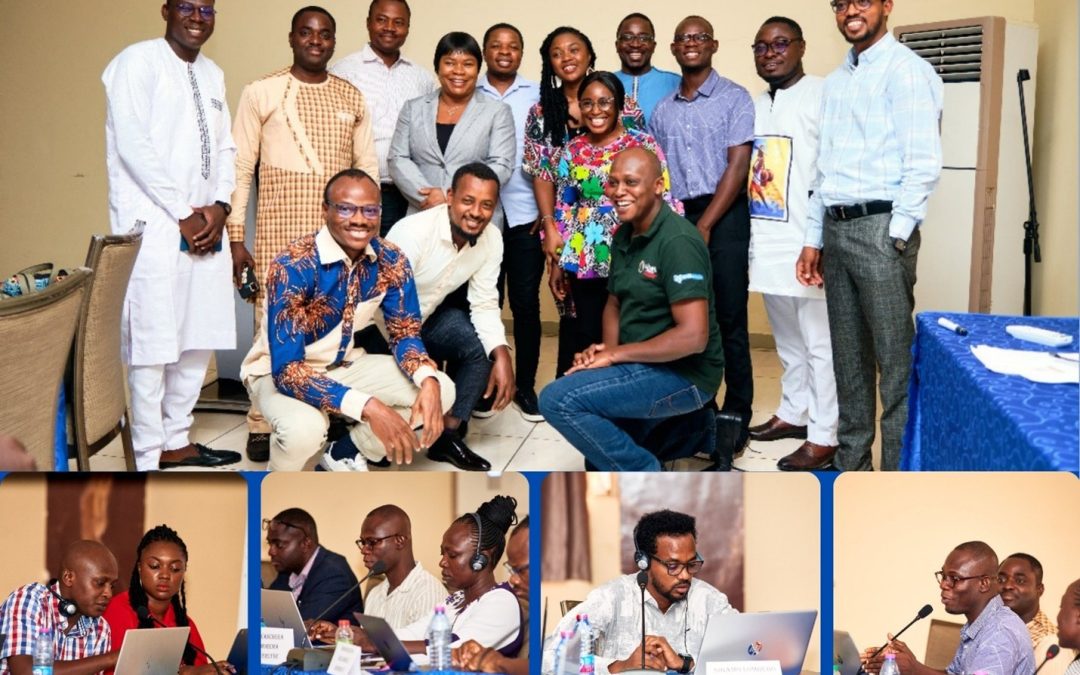
The AfRes-Data Early Career Researcher (ECR) Training and Capacity Building Workshop, convened by the Union for African Population Studies (UAPS), was held from February 13–17, 2023, at the Tomreik Hotel, Accra, Ghana. The five-day event brought together fellows of Cohort 1 for advanced training emphasized not only methodological rigor but also the translation of research into meaningful societal impact.
Objectives
The Accra workshop built on the foundation laid in Nairobi and aimed to:
- Strengthen fellows’ technical expertise in R programming and spatial analysis.
- Equip participants with practical skills in grant writing, monitoring and evaluation, and strategic communication.
- Reinforce the link between academic research, policy influence, and community benefit.
- Foster professional networks and mentorship for sustained collaboration.
Workshop Structure and Key Activities
Day 1 – Unlocking R and Spatial Analysis
Dr. McEwen Khundi introduced participants to R programming and spatial analysis tools, enabling them to convert raw data into compelling visual narratives.
Day 2 – Seeing the Invisible
Sessions on advanced spatial analysis revealed hidden dimensions of demographic change, inequality, and health trends, showing participants how to detect and map critical patterns in data.
Day 3 – Winning Resources
Dr. Aimée Lulebo Mampasi and Dr. Naa Dodua Dodoo (joined remotely) led a session on grant writing and management, offering strategies to transform strong research ideas into competitive proposals.
Day 4 – Building Systems That Work
Prof. José Mangalu Mobhe guided participants through monitoring and evaluation frameworks, emphasizing approaches that measure outcomes that matter for programs and policy.
Day 5 – Making Research Speak to Power
Ms. Hleziwe Hara and Dr Naa Dodua Dodoo (joined remotely) trained fellows in strategic communication, with practical exercises on developing clear, persuasive messages that resonate with policymakers and stakeholders.
A Holistic Approach to Research Training
The workshop distinguished itself by addressing the full research lifecycle:
- Technical mastery – advanced skills in R and spatial analysis.
- Resource mobilization – practical training in grant writing and fundraising.
- Systems thinking – designing monitoring and evaluation frameworks.
- Impact communication – translating evidence into actionable insights.
Outcomes
Participants left the workshop with:
- Strengthened technical and analytical capacities.
- Drafted and refined grant applications.
- Communication strategies tailored for policymakers.
- Expanded professional networks and mentorship pathways.
Early outcomes are already evident, with fellows applying spatial analysis in ongoing projects, submitting competitive funding proposals, and sharing findings in more accessible formats.
Looking Ahead
As Africa faces rapid urbanization, demographic shifts, and health challenges, the Accra workshop demonstrated that early career researchers are not only documenting change but driving it. The AfRes-Data ECR Fellowship continues to set a benchmark for research training—equipping scholars with the tools, confidence, and networks to generate evidence that informs policy and development across Africa.
Recent Comments