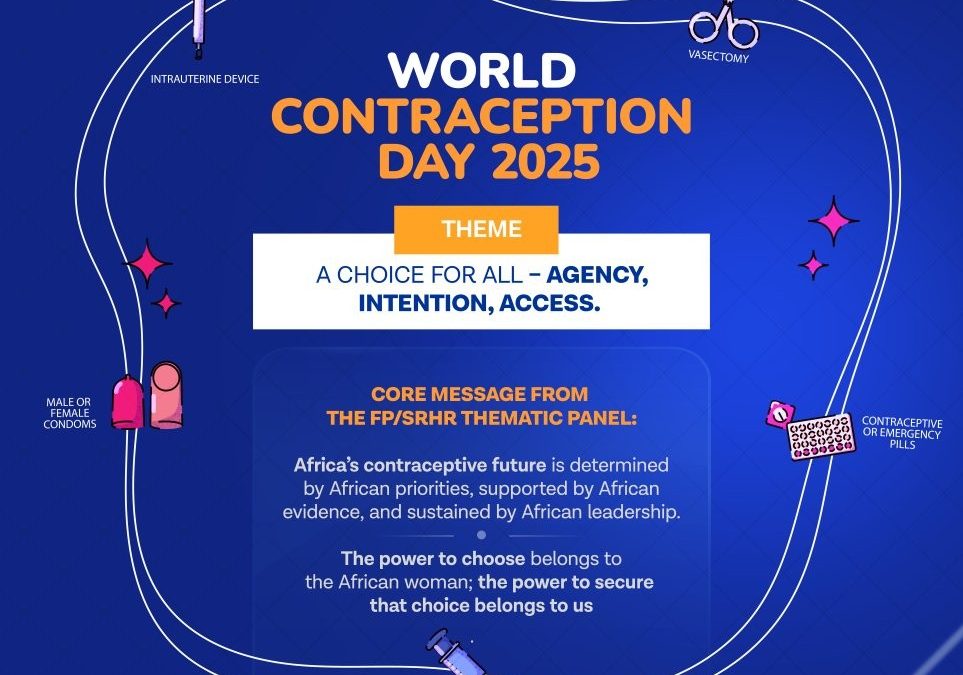
A call to action from the UAPS FP/SRHR Scientific Thematic Panel on World Contraception Day 2025
On World Contraception Day 2025, the UAPS FP/SRHR Panel emphasizes the urgent need to address the growing risks to contraceptive access across Africa. Recent developments, including abrupt and significant aid reductions and the uncertain fate of nearly $10 million in contraceptive supplies originally destined for African countries, underscore both the fragility of current systems and the urgent need for new approaches in research, policy, and programming to safeguard future contraceptive access across the continent. These losses are not only setbacks for contraceptive access but also pose threats to women’s and girls’ health, reproductive rights and economic empowerment throughout the continent; compromising their freedom to plan or power to choose. They serve as a stark reminder that Africa’s contraceptive future cannot rest solely on external funding, nor be driven primarily by donor priorities.
In this era of funding uncertainty, supporting and strengthening Africa-led research is more critical than ever. We need evidence that can better track demand, document emerging inequities, and identify which investments deliver the greatest health and social returns in a shifting funding and programmatic landscape. Grounded, context-specific research is increasingly essential to guide African governments, civil society, and partners toward effective and relevant approaches for sustaining access to contraception for men and women throughout the region. Key to this is promoting innovative and disruptive analyses that engage stakeholders with new perspectives and solutions for developing strategies to mitigate the impact of these unprecedented FP/SRHR funding losses, ensuring that African voices and evidence drive country responses and sustain progress toward the 2030 SDGs.
The Path Forward: From Crisis to Transformation
The current contraceptive security crisis, while devastating, presents an opportunity to rebuild better systems with African ownership, African leadership, and African sustainability at their core. In this era of funding uncertainty, UAPS and its FP/SRHR Panel are championing a transformative approach which places African voices, African research, and African evidence at the center of contraceptive security strategies. We remain committed to advancing African-led research and perspectives that can shape emerging global dialogues on the future of contraceptive security. With its focus on thought leadership and capacity strengthening in FP/SRHR, the UAPS FP/SRHR Scientific Thematic Panel works to promote rigorous evidence generation, Africa-driven research agendas, and collaboration across regional and global stakeholders. In doing so, we aim to help ensure that contraceptive security and reproductive rights remain central to health and development strategies even as donor support becomes less assured.
Join the Movement in Securing Africa’s Contraceptive Future
The fight for contraceptive security is the fight for women’s fundamental right to choose their own futures. This is not a battle we can afford to lose and this is how you can contribute:
Support UAPS: We invite you to support the work of UAPS by voting for funding to support UAPS’s technical capacity strengthening project to train the next generation of population scientists.
Engage with Our Research: Join our efforts to drive African-led responses, link evidence with policy and advance innovative research to ensure contraceptive access by visiting UAPS FP/SRHR panel website for information on up-coming events. Some of these events include a side event at ICFP in November and an up-coming webinar series on “Advancing regional analyses on FP/SRH service disruptions to tailor evidence-informed interventions”.
Amplify African Voices: Share and promote research, analysis, and solutions developed by African scholars and practitioners.
Advocate for Change: Support policy reforms that prioritize sustainable, African-led approaches to contraceptive security.
Together we can ensure that Africa’s contraceptive future is determined by African priorities, supported by African evidence and sustained by African leadership.
The power to choose belongs to the African woman; the power to secure that choice belongs to us all!
Recent Comments