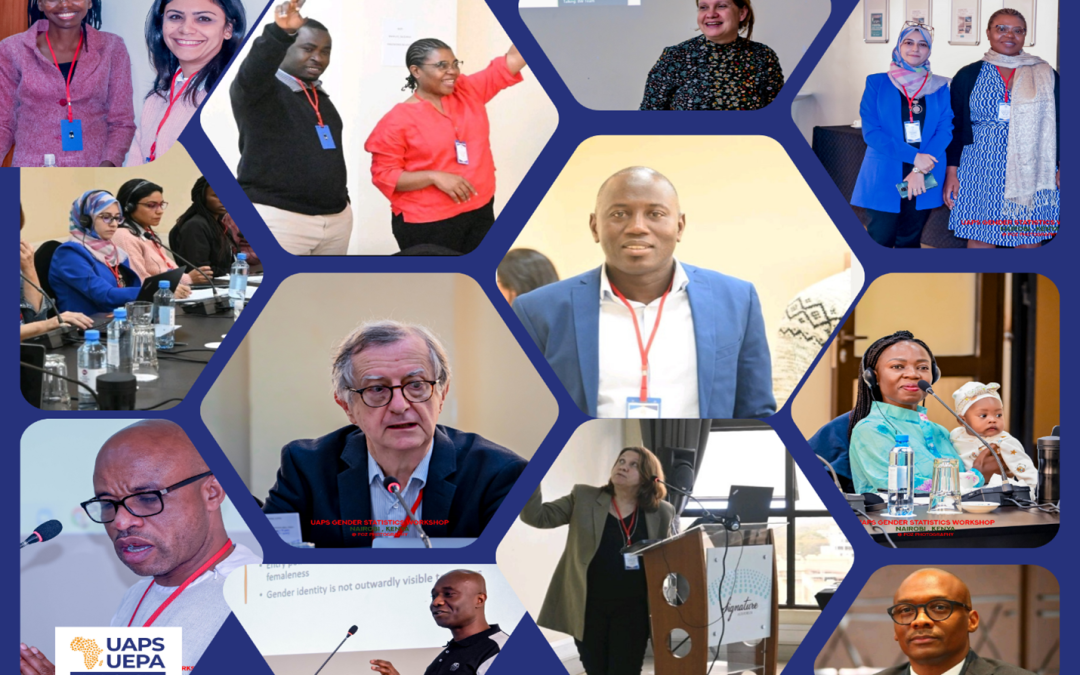
The Union for African Population Studies (UAPS), through its Gender Equality Scientific Thematic Panel, led by Dr. Madeleine Wayack-Pambè (Université Joseph Ki-Zerbo) and Vice-Chair: Dr. Ousmane Faye (Laboratoire de recherches économiques et monétaires [LAREM] – Université Cheikh Anta Diop [UCAD], Dakar) convened a three-day workshop on Gender Statistics: Identifying and Addressing Gaps in Gender Statistics for SDG Monitoring in Africa. The workshop was held from 23 to 25 August 2022 in Nairobi, Kenya, as part of the Mapping Gender Data in Africa Initiative.
Objectives
The workshop aimed to:
- Improve the availability and usability of gender-related data in Africa.
- Assess the relevance and comprehensiveness of SDG gender indicators in African contexts.
- Identify gaps, methodological challenges, and new areas of research.
- Build partnerships for sustained action and collaboration among researchers, policymakers, and practitioners.
Participants
The workshop brought together 18 participants from 12 African countries, as well as experts from North America and Europe. Participants included representatives of:
- National Statistical Offices,
- UN agencies,
- Universities and research institutions,
- Civil society organizations, and
- Independent researchers and practitioners.
Prominent participants included:
- Ms. Isabella Schmidt, Regional Gender Statistics Advisor, UN Women (East & Southern Africa)
- Ms. Michèle Seroussi, Gender Statistics Specialist, UN Women (West & Central Africa)
- Mr. Solly Molayi, Chief Director: Social Statistics, Statistics South Africa
- Prof. Jacques Charmes, Emeritus Research Director, IRD (France)
- Dr. Chimaraoke Izugbara, Director of Global Health, Youth & Development, ICRW
Key Themes and Discussions
Over three days, participants explored a range of issues at the intersection of gender, statistics, and policymaking.
- Setting the Scene: The importance of gender statistics in policymaking, and an overview of African and global initiatives.
- SDG 5 Progress Review: UN Women presented regional analysis showing uneven progress, persistent data gaps, and areas requiring urgent action such as child marriage, gender-based violence, and women’s economic empowerment.
- Methodological Innovations:
- Measuring gender identity and the challenges of cultural acceptance and data collection.
- Capturing time use and unpaid care work, highlighting its role in time poverty and women’s economic marginalization.
- Exploring intra-household decision-making through bargaining models and power relations.
- Thematic Areas:
- Gender-based violence and challenges in measurement.
- Gender gaps in agriculture and implications for food security and poverty reduction.
- Youth employment, education, and training, with gendered barriers and labour market inequalities.
- Communicating Gender Statistics: Strategies for engaging media, using social media platforms, and tailoring outputs to policymaker needs.
- Panel Discussions: Focused on gender statistics in support of women’s economic empowerment, with contributions from UN Women and academic experts.
Outcomes and Recommendations
The workshop generated key outcomes:
- Data gaps identified: Particularly in areas such as unpaid care work, women’s land rights, and gender identity.
- Policy recommendations: Integrated approaches linking social protection, green economy, and women’s empowerment.
- Capacity building needs: Stronger training for fieldworkers on sensitive topics such as gender-based violence.
- Institutional collaboration: Commitment to building a platform for sharing gender statistics and strengthening administrative data systems.
- Next steps: Develop partnerships across research, government, and civil society to ensure gender statistics inform SDG monitoring and national policymaking.
Looking Ahead
As Africa advances toward the 2030 Agenda, the workshop underscored that gender statistics are not just numbers, they are tools for accountability, empowerment, and change. By strengthening gender data systems, addressing persistent gaps, and fostering collaboration, UAPS and its partners aim to ensure that progress toward gender equality in Africa is both measurable and meaningful.
Recent Comments