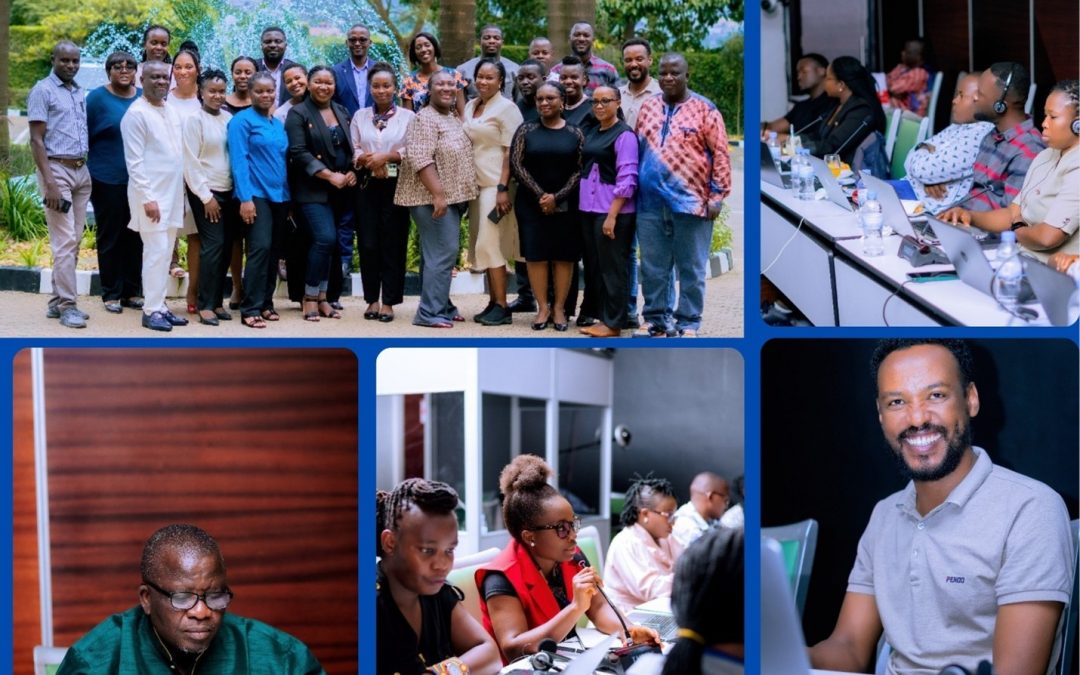
The AfRes-Data Early Career Researcher Training Workshop was held in Rwanda, bringing 20 fellows from across both Anglophone and Francophone Africa for five days of intensive learning, collaboration, and mentorship. The workshop was designed not only to build technical skills but also to strengthen institutional capacity and promote adaptive learning approaches. The workshop took place from March 11-15, 2024 at the Park Inn hotel in Kigali, Rwanda.
Objectives
The workshop aimed to:
- Strengthen participants’ capacity in both qualitative and quantitative research methods.
- Promote the use of digital tools for qualitative data analysis.
- Support francophone engagement in research capacity-building initiatives.
- Embed mentorship and institutional partnerships to ensure long-term impact.
Workshop Structure and Key Highlights
Day 1 – Foundations in Qualitative Research
Facilitators Dr. Naa Dodua Dodoo and Ms. Hleziwe Hara introduced participants to qualitative research approaches and data analysis. Sessions emphasized the importance of qualitative methods in complementing quantitative techniques, helping researchers to understand the “why” behind observed patterns.
Day 2 – Practical Skills in Digital Tools
Participants received hands-on training in Dedoose, software for qualitative data analysis. Exercises included coding interview transcripts and analyzing focus group discussions, equipping participants with tools they could apply immediately in their own work.
Days 3 & 4 – Adaptive Learning in Action
Originally scheduled to cover advanced instrumental variable regression, the agenda was adjusted following participant feedback. Facilitators Prof. José Mangalu and Prof. Zaharie Dimbuene focused on strengthening foundational regression analysis. This adjustment highlighted the program’s commitment to adaptive learning, ensuring that participants gained solid grounding before advancing to more complex techniques.
Day 5 – From Learning to Application
The final day emphasized application, with participants beginning to draft research papers for submission to the 9th African Population Conference. This practical focus reinforced the importance of linking research skills to outputs that influence scholarship and policy.
Faculty and Partnerships
The faculty team combined international expertise with local knowledge:
- Dr. Naa Dodua Dodoo – Mixed-methods research.
- Ms. Hleziwe Hara – Communication and research translation.
- Prof. José Mangalu – Quantitative analyses.
- Prof. Zaharie Dimbuene – Demographic research.
Collaboration with AFIDEP and Université de Kinshasa (UNIKIN) underscored the workshop’s commitment to institutional strengthening, ensuring that training outcomes will extend beyond individual participants to benefit the wider research community.
Mentorship and Institutional Strengthening
A structured mentorship component was introduced, with each participant developing a mentorship plan to guide continued professional development. This approach moves beyond short-term training to support long-term growth of both researchers and their institutions.
Key Outcomes
- Enhanced skills in qualitative and quantitative research methods.
- Practical experience with Dedoose for qualitative analysis.
- Draft papers initiated for the African Population Conference.
- Strengthened networks among francophone researchers.
- Institutional linkages reinforced through collaboration with AFIDEP and UNIKIN.
Conclusion and Next Steps
The Rwanda workshop demonstrated that effective capacity building requires flexibility, responsive facilitation, and strong institutional partnerships. By adapting content to participant needs, embedding mentorship, and fostering collaboration, AfRes-Data set a new standard for training in Anglophone and Francophone Africa.
The ripple effects are expected to be visible in upcoming conference papers, journal articles, and institutional initiative ensuring that the workshop’s impact extends well beyond its five days.
Recent Comments